Aug 20
2026
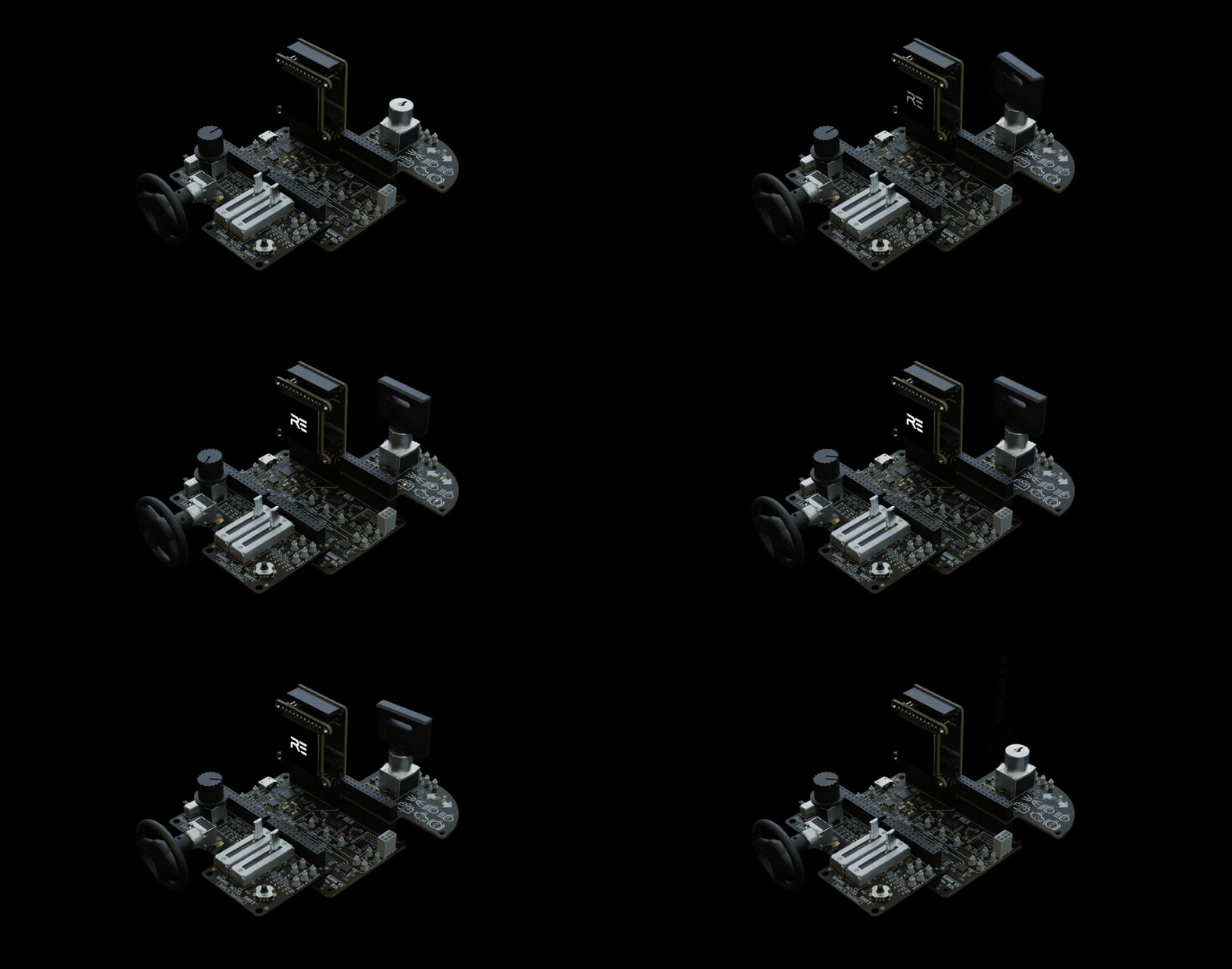
In developing electronic automotive devices, arguably the most important phase of the process is the testing, in order to ensure reliability, predictability of behavior, and, above all, the safety of the vehicle. Because of that, ECUs have rigorous standards for being considered automotive-grade. Using automotive-grade materials in testbeds allows for better mimicry of the equipment that will later finds itself in the architecture of a vehicle. As testbeds rated for the highest safety level tend to be proprietary and expensive, they're not easily accessible to researchers and developers wishing to experiment with new automotive ideas - thus, this lack of access limits technological progress for the automotive industry. Read more
Aug 12
2026
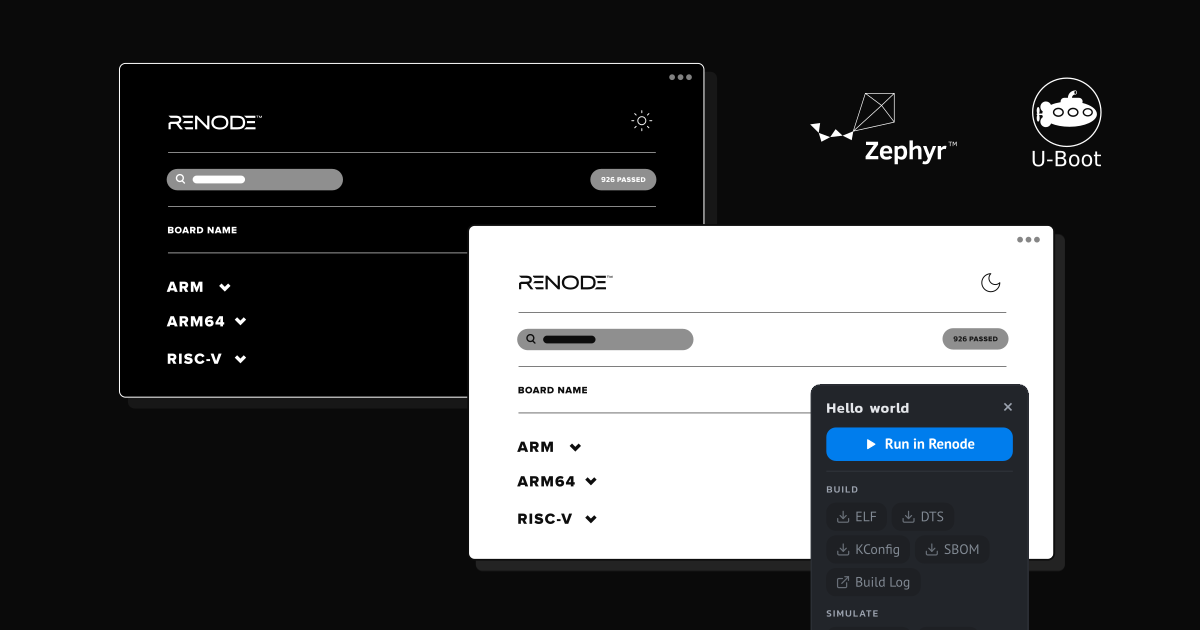
Antmicro's Renode simulation framework, on top of its broad support for various platforms and architectures, provides advanced capabilities for repeatable and scalable testing in an automated CI environment. A few years back, we leveraged these capabilities along with the structured data available in Zephyr RTOS to create the Renode Zephyr Dashboard, soon followed by an analogous Renode U-Boot Dashboard, which represent unified device tree data and Renode simulation results in a comprehensive and user-friendly way. Read more
Jul 16
2026
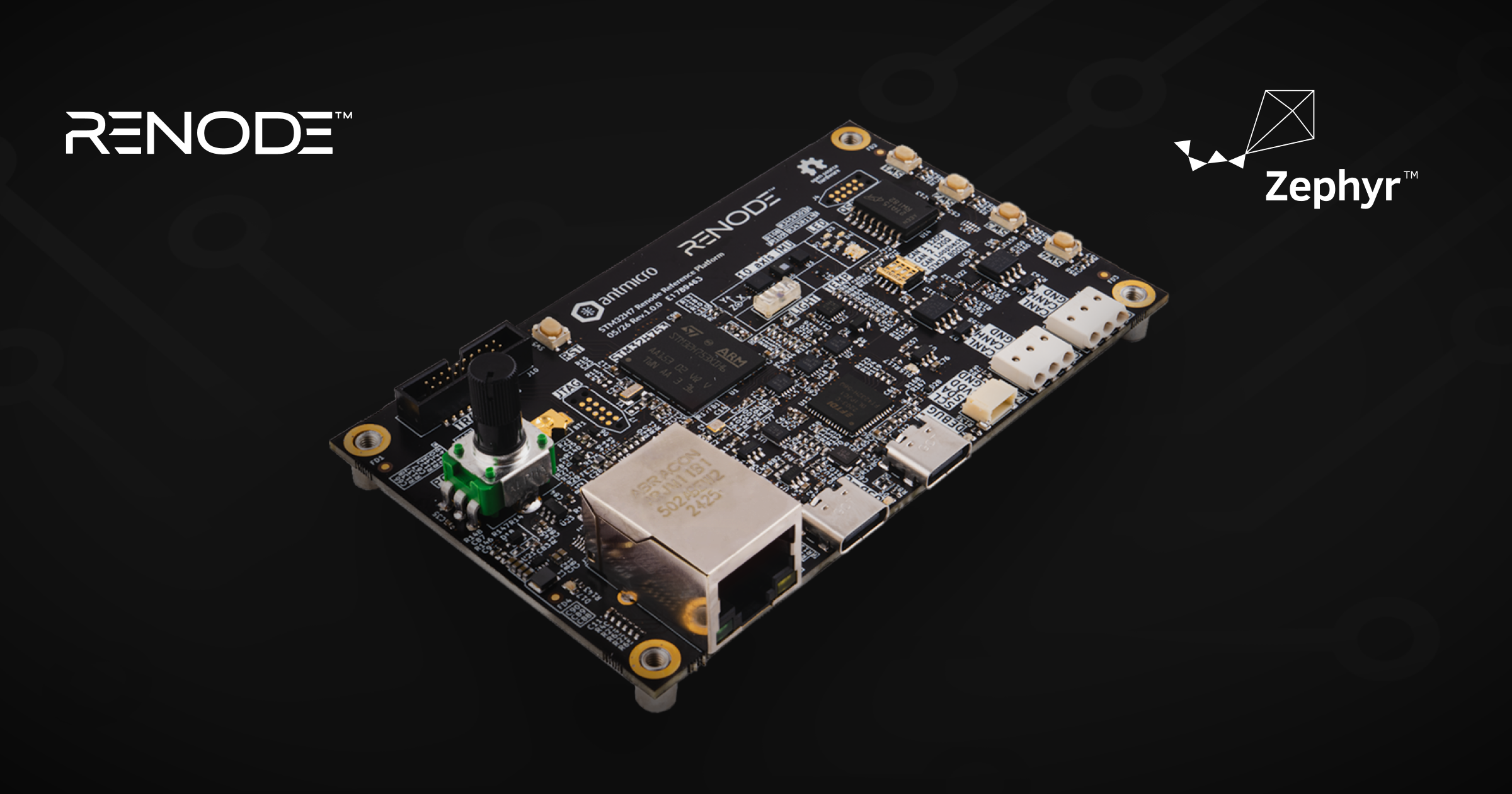
Antmicro's open source Renode simulation framework allows for expediting the process of developing an embedded device via simulating the physical hardware. It lets the user run, debug, and test their simulated embedded systems on their host, without needing the physical components present. The key to any good simulation, ultimately, is its accuracy - i.e., how well it mirrors real hardware behavior. Read more
Jul 1
2026

Google's Coral NPU is an open source, RISC‑V-based ML accelerator designed for ultra-low-power, always-on edge AI applications. Developed in a HW-SW co-design paradigm, the Coral NPU offers efficient, native ML acceleration for wearables, IoT devices, mobile phones and more. Read more
Jun 23
2026
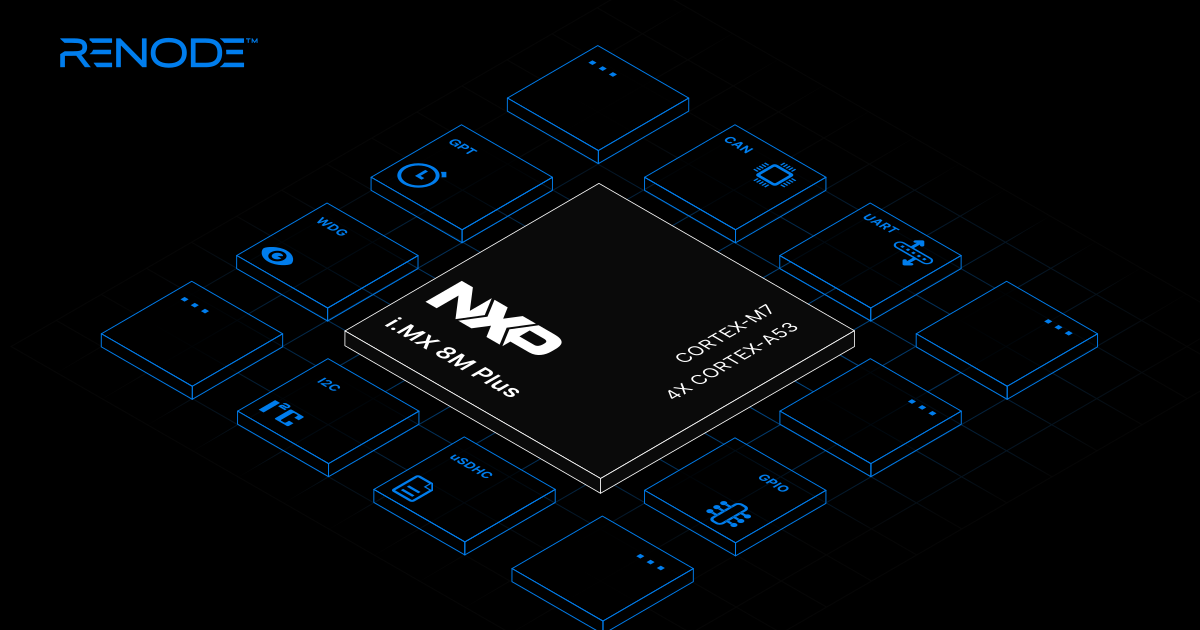
Antmicro's Renode simulation framework supports a broad range of architectures and platforms, including the popular NXP i.MX RT500 and i.MX RT700 MCUs. While the i.MX RT series targets applications requiring real-time processing with low power consumption, the high-performance NXP i.MX family supports applications with advanced video and audio processing running on Linux. A notable member of this family is the heterogeneous i.MX 8M Plus SoC featuring four Arm Cortex-A53 cores and one M7 core, with a Machine Learning accelerator, 2D and 3D graphics, video support, audio processing, and more. It also offers many connectivity options, including Ethernet, USB, CAN, and PCIe. Read more